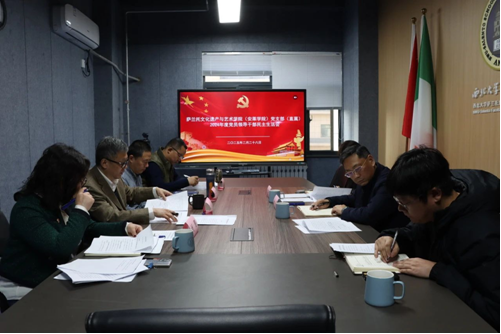
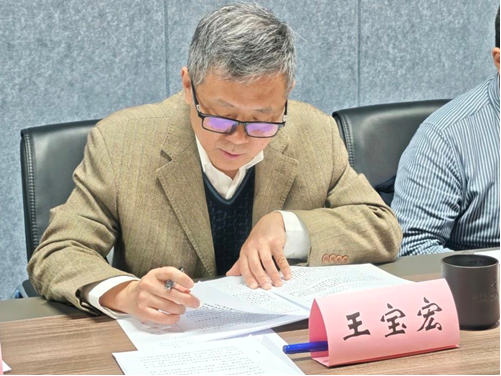
On the morning of February 28, the CPC Party Committee of the NWU-Salento School of Cultural Heritage and Arts convened the 2024 Democratic Life Meeting for Party Leadership. The session was attended by Du Yong, leader of NWU’s third supervision team and Director of the Student Affairs Office, along with liaison officer Li Ruoxin, who provided guidance. Leading members of the NWU-Salento School of Cultural Heritage and Arts participated in the meeting, which was chaired by Wang Baohong, Secretary of the CPC Party Committee of An-Lai School.
The CPC Party Committee of the NWU-Salento School of Cultural Heritage and Arts attached high importance to this meeting, centering on the theme of “studying and implementing Xi Jinping Thought on Socialism with Chinese Characteristics for a New Era, consolidating and deepening the outcomes of Party discipline education, comprehensively leveraging its constraining, safeguarding, and motivating roles, and providing strong disciplinary guarantees for furthering comprehensive reforms and advancing Chinese modernization”. Prior to the meeting, the committee solicited opinions and suggestions from faculty and students through study sessions, research forums, and candid conversations. In strict accordance with the meeting’s requirements and based on prior rectification efforts, the leadership meticulously prepared comparative review materials and personal statements.
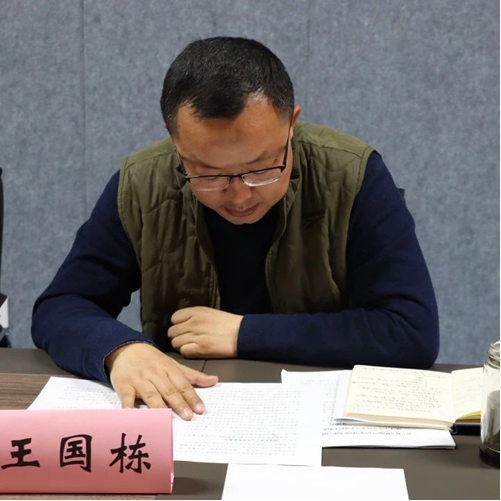
At the meeting, Comrade Wang Baohong, on behalf of the leadership team, delivered a comparative review report. He outlined the implementation status of corrective measures since the thematic Democratic Life Meeting on Xi Jinping Thought on Socialism with Chinese Characteristics for a New Era study and education campaign, summarized the outcomes of Party discipline education, and detailed the preparatory work for this meeting. Focusing on the “four key aspects” outlined in NWU’s guidelines, alongside collected feedback from faculty and students as well as case analyses, he thoroughly identified prominent issues within the leadership team, conducted in-depth root-cause analysis, and proposed improvement measures across four areas: enhancing theory learning, boosting innovation, tightening discipline, and strengthening service commitment. These measures charted a clear path for future work.
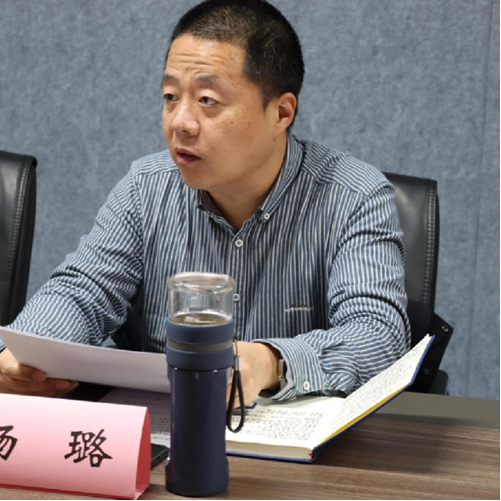
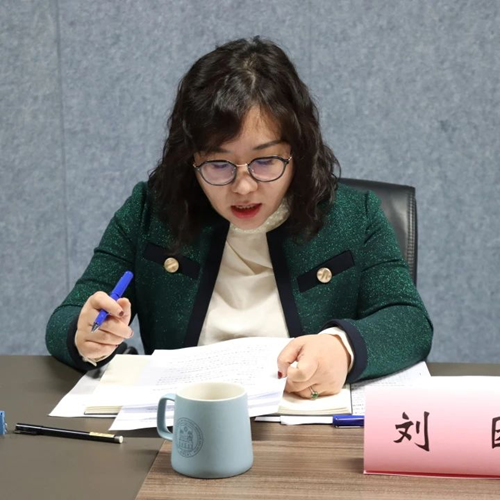
Subsequently, leading members of the CPC Party Committee of the NWU-Salento School of Cultural Heritage and Arts conducted rigorous self-assessment, tying their remarks to core responsibilities such as advancing Party building, enhancing discipline enforcement and oversight, promoting integrated development, and innovating educational management models for China-foreign joint programs. They candidly identified shortcomings, pinpointed underlying causes, engaged in earnest criticism and self-criticism, and formulated targeted corrective actions.
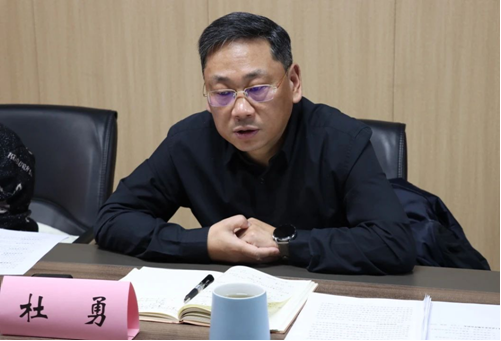
In his concluding remarks, Du Yong noted that the meeting was thoroughly prepared, structurally sound, and substantively comprehensive. He praised the penetrating comparative review, frank and constructive criticism/self-criticism, and actionable, well-targeted rectification plans. The session successfully achieved its goals of facilitating ideological exchange, problem identification, directional clarity, and unity of purpose, while solidifying the gains of Party discipline education—marking it as a high-caliber democratic life meeting.
He emphasized that the leadership must deepen their understanding of the fundamental significance and purpose of the Democratic Life Meeting, further promoting democratic exchanges among team members to return to its essential purpose, highlighting intra-Party supervision, and ultimately facilitating the smooth progress of all school endeavors through constructive ideological engagement. Building upon the themes of this Democratic Life Meeting and the realities of the school’s development, he proposed three key recommendations. First, it is important to further strengthen theoretical study, enhance political awareness, and focus on systematic summarization by applying theory to guide practice, addressing identified issues with problem-oriented approaches, establishing long-term problem-solving mechanisms, and implementing practical rectification plans. Second, it is necessary to enhance team building through unity and collaboration, consolidating the achievements of Party discipline education by improving the leadership’s work style, disciplinary compliance, and integrity cultivation, using this meeting as an opportunity to foster a positive and upright atmosphere while increasing work intensity and depth. Third, it is significant to advance comprehensive planning and cohesion to promote integrated development by continuously improving capabilities in strategic planning, research, and coordinated decision-making, seizing national policy opportunities to strengthen reform and innovation, optimizing resource allocation, and deepening the integrated development of Chinese-foreign joint programs.
In conclusion, Comrade Wang Baohong summarized the outcomes of the Democratic Life Meeting and delivered a statement on behalf of the leadership, affirming that the team would treat this meeting as a new starting point, systematically consolidating its lessons to implement rectification measures in a regular and long-term manner, guided by the proposed corrective actions and the supervision team’s feedback, thereby advancing the school’s high-quality, connotative development.





 Contact Us:+86-29-88309070
 Address:No.1 Xuefu Avenue, Xi'an Guodu Educational Technology Industrial Development Zone, Chang'an District, Xi'an
 Email:anlaishool@nwu.edu.cn
 西北大学公众号
 安莱学院公众号